No products in the cart.
Other
Artificial vs Imitation vs Oxidized Jewellery: What’s the Difference?
29
Oct
Oct
Shopping for jewellery online in Pakistan, you will see three terms again and again: artificial, imitation and oxidized. Sellers often use them as if they mean the same thing, and that causes confusion about what you are actually buying.
This guide explains each type in plain language, shows how they differ, and helps you pick the right one for weddings, daily wear and gifts.
What Is Artificial Jewellery?
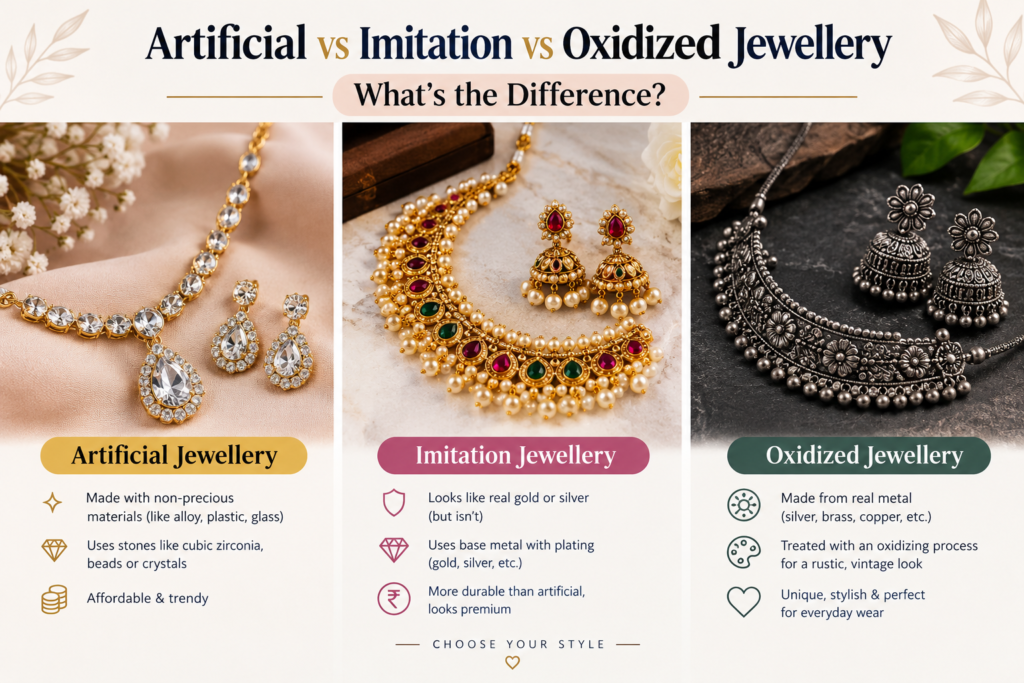
Artificial jewellery is an umbrella term for any jewellery that is not made from real gold, silver or precious stones. It is usually made from brass, copper, alloys, glass, resin, acrylic or beads, then finished with plating, polish or colour.
People choose it because it is affordable, comes in endless designs, and lets you match a different set to every outfit. Brides often buy several artificial sets for mehndi, baraat and walima instead of spending on real gold.
The trade-off is durability. Plating can fade with sweat, perfume and friction. For the pros and cons in detail, read our guide on pros and cons of artificial jewellery, and see why artificial jewellery is more popular than ever.
What Is Imitation Jewellery?
Imitation jewellery is a type of artificial jewellery designed to copy the look of fine jewellery: gold, diamond, pearl or kundan. Think gold-plated bangles, zircon (American diamond) rings, faux pearl sets and bridal necklaces that look like real gold.
In everyday Pakistani and Indian shopping, “artificial” and “imitation” are used interchangeably, but there is a small difference:
- Artificial is the broad category. It covers fashion pieces that don’t try to look like anything real, such as beaded or colourful costume jewellery.
- Imitation specifically tries to look like the real thing, such as a gold-look bridal set.
You can see a wide selection on our imitation jewellery page and in our Indian jewellery collection.
What Is Oxidized Jewellery?
Oxidized jewellery is defined by its finish, not by what it imitates. The metal is treated with chemicals so it develops a dark, antique, blackened look. That darkness highlights carved details and gives the piece a vintage, tribal or traditional character.
Real oxidized sterling silver is silver that has been darkened with a sulphur compound. Most oxidized jewellery sold at affordable prices in Pakistan, though, is silver-look alloy or brass with an oxidized finish. It is not pure silver. Always check the product description for the base metal.
Oxidized jewellery is famous for jhumkas, chokers, anklets and ethnic sets. Our full guide on what oxidized silver jewellery is and its advantages covers how it is made.
Artificial vs Imitation vs Oxidized: Quick Comparison
| Artificial | Imitation | Oxidized | |
|---|---|---|---|
| What it means | Any non-precious jewellery | Jewellery made to look like gold, diamond or pearl | Jewellery with a dark, antique finish |
| Typical materials | Brass, alloy, glass, beads, resin | Gold-plated alloy, zircon, faux pearls | Silver, or silver-look alloy or brass |
| Look | Fashion, colourful, modern | Shiny, gold or diamond look | Dark, vintage, traditional |
| Best for | Daily and party wear | Weddings, bridal sets | Casual, festive, boho and ethnic outfits |
| Main weakness | Plating can fade | Plating can wear off | Finish can lighten with rubbing |
The three categories also overlap. An oxidized jhumka is usually both artificial and oxidized, and a gold-plated bridal set is both artificial and imitation.
Which Should You Choose?
For a wedding or bridal look: go for imitation. Gold-look choker sets and kundan jewellery photograph well and cost far less than real gold. Browse our bridal collection on our online store.
For a traditional or festive outfit: oxidized jewellery pairs beautifully with cotton, lawn and eid outfits. Start with our oxidized silver jhumka earrings, our antique oxidized silver choker set or our anklet collection.
For everyday wear: if you wear jewellery daily, avoid pieces that lose their finish quickly. Our 316L stainless steel jewellery does not tarnish and suits sensitive skin. See why in our stainless steel jewellery guide.
For a personal gift: try custom name jewellery.
How to Make Each Type Last Longer
- Keep it dry. Water, sweat and humidity speed up fading and darkening.
- Put jewellery on last. Apply perfume, hairspray and lotion first, then wear your jewellery.
- Store separately. Use a small box or pouch so pieces don’t scratch each other. A zip pouch with a silica gel packet helps in humid weather.
- Clean gently. Wipe with a soft dry cloth. Don’t use harsh chemicals on plated or oxidized pieces, because they strip the finish.
- Know when to repair. Loose stones and broken clasps can often be fixed. Follow our guide on how to repair damaged artificial jewellery.
Frequently Asked Questions
Is imitation jewellery the same as artificial jewellery?
Almost. Imitation jewellery is a kind of artificial jewellery that tries to look like gold, diamond or pearl.
Is oxidized jewellery real silver?
Sometimes. Oxidized sterling silver is real silver. Most budget oxidized jewellery is an alloy with an oxidized finish, so check the description.
Does oxidized jewellery turn black on its own?
It is already dark by design. If it turns more dull, clean it gently with a soft cloth.
Which type lasts the longest?
Solid pieces such as stainless steel or real oxidized silver last longest. Plated artificial or imitation pieces last as long as their plating does, which depends on how often you wear them and how you care for them.
